Signature Treatment
Non-surgical lifting with focused ultrasound. Ultherapy reaches the SMAS — the same deep support layer a surgeon tightens in a facelift — and stimulates your own collagen to lift the brow, jawline, and neck. No incisions, no downtime.
Book a ConsultationMost skin-tightening devices treat the surface. Ultherapy uses focused ultrasound to deliver energy past the skin and into the SMAS — the fibromuscular layer a surgeon lifts and sutures during a facelift. Reaching that depth is what allows a non-surgical treatment to produce genuine lift rather than surface smoothing.
Ultrasound imaging lets the provider see each layer before delivering energy, so treatment is placed precisely and safely for your anatomy.
1.5 mm
Superficial dermis
3.0 mm
Deep dermis
4.5 mm
SMAS — the lifting layer
Ultherapy is a collagen treatment, which means it works on your body's timeline rather than the device's. Here is the sequence we walk every patient through before booking.
DAY 0
Immediately After
Many patients see an initial tightening right away. Part of this is the tissue's immediate response to treatment, so it settles over the first days.
WEEKS 4–8
Collagen Builds
New collagen forms gradually in the treated layers. Changes to the jawline and brow become steadier and more defined.
MONTHS 2–3
Full Result
Peak lift typically appears at two to three months and continues to hold as your skin maintains the new collagen.
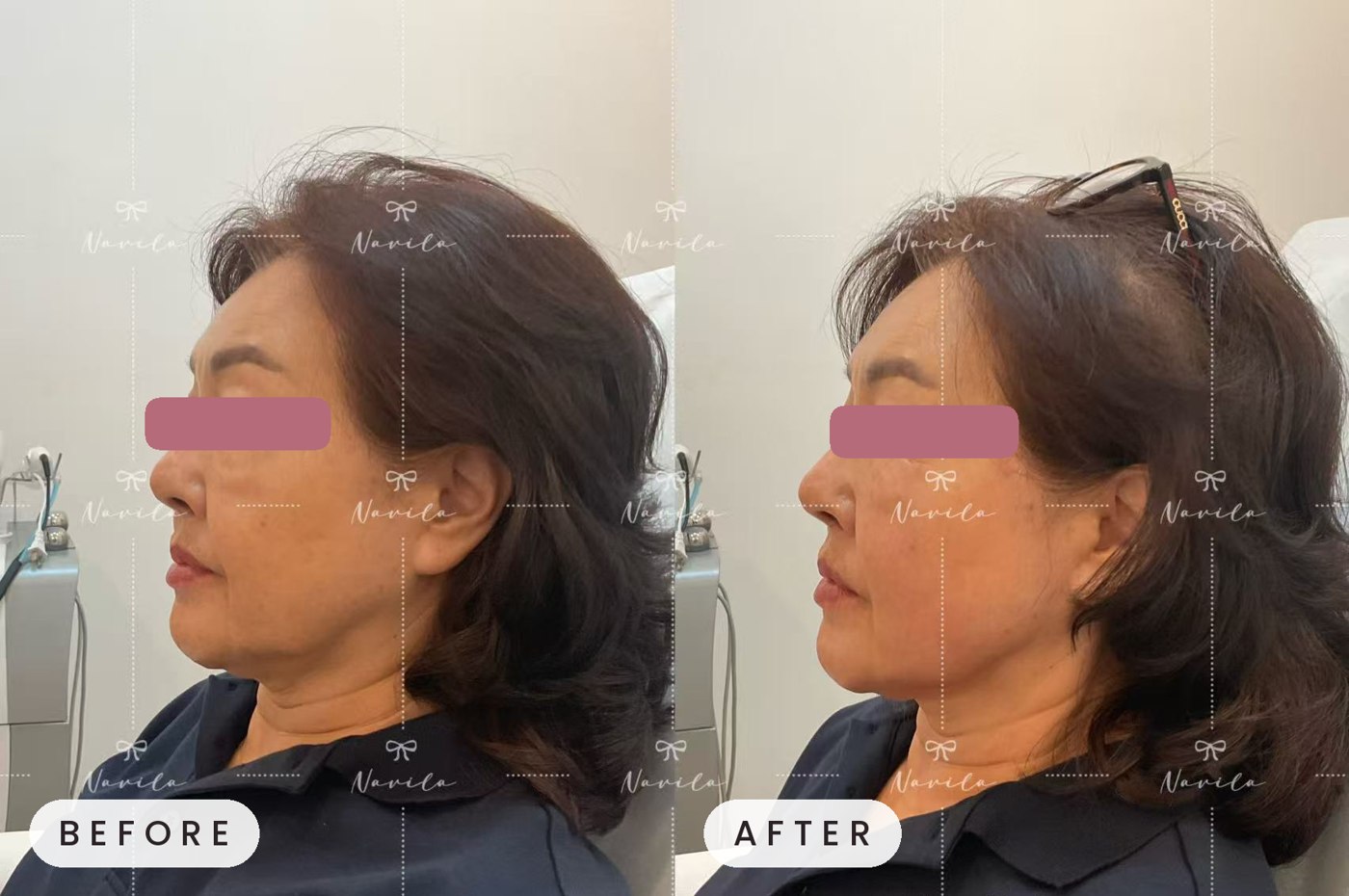
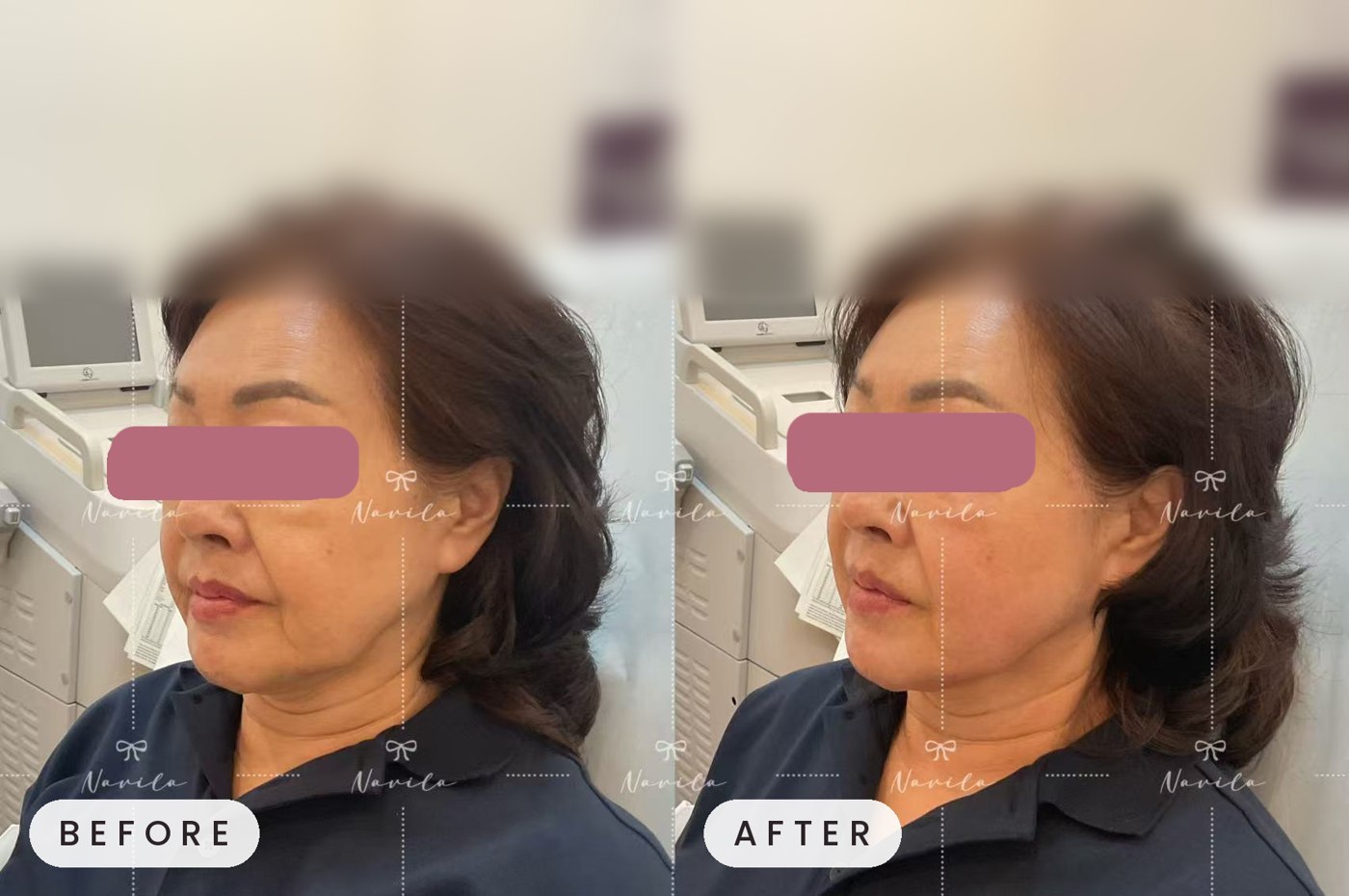
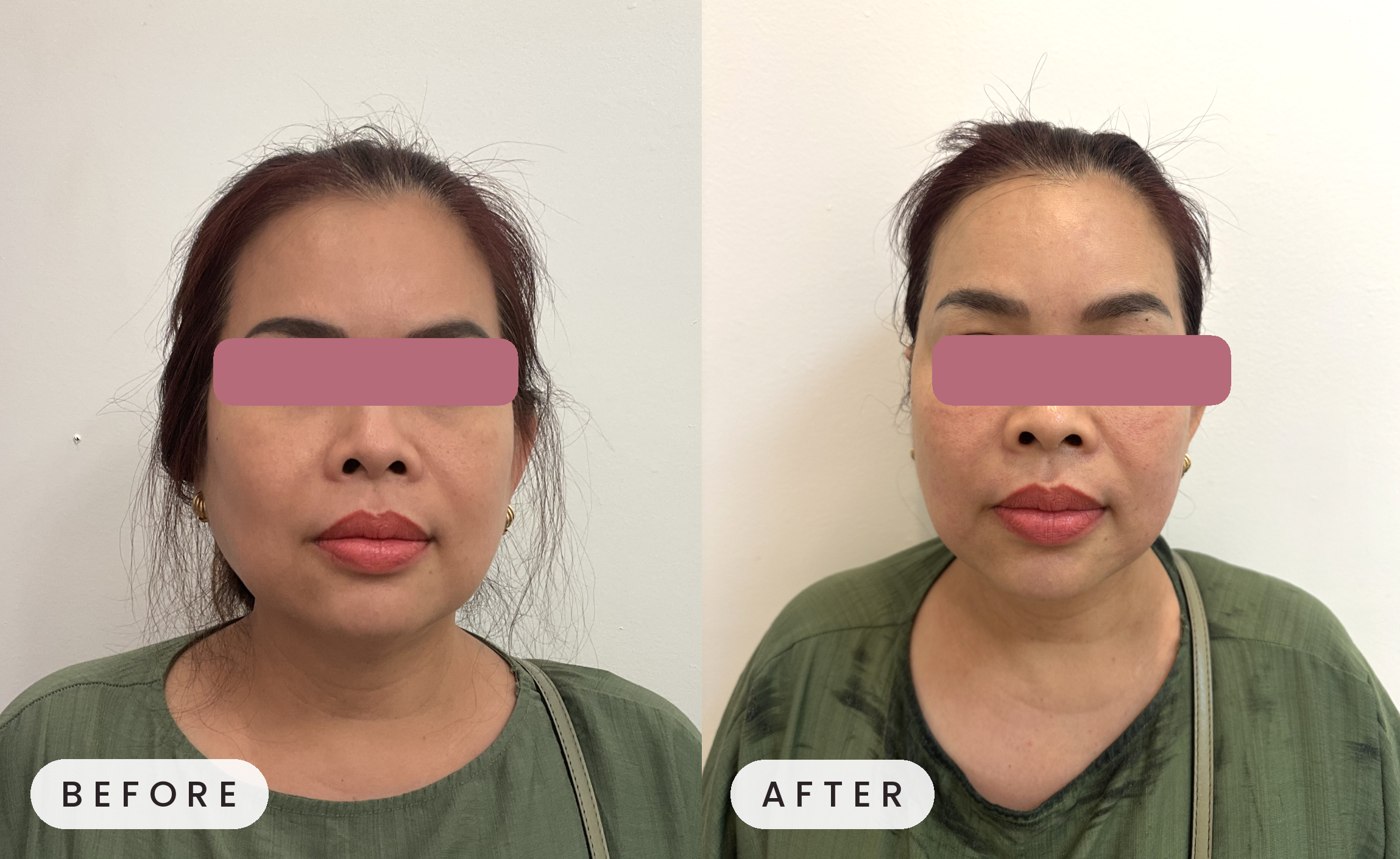
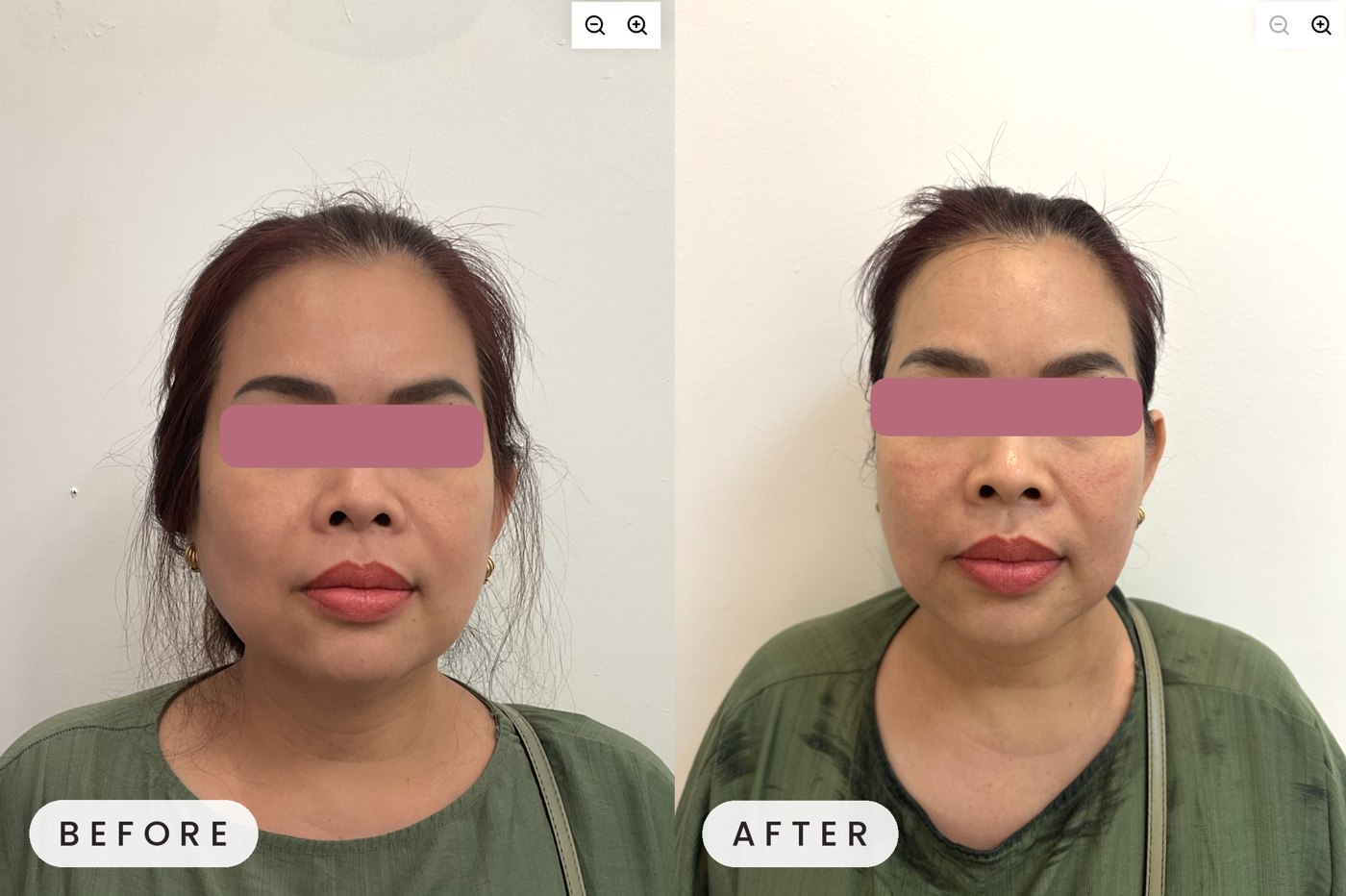
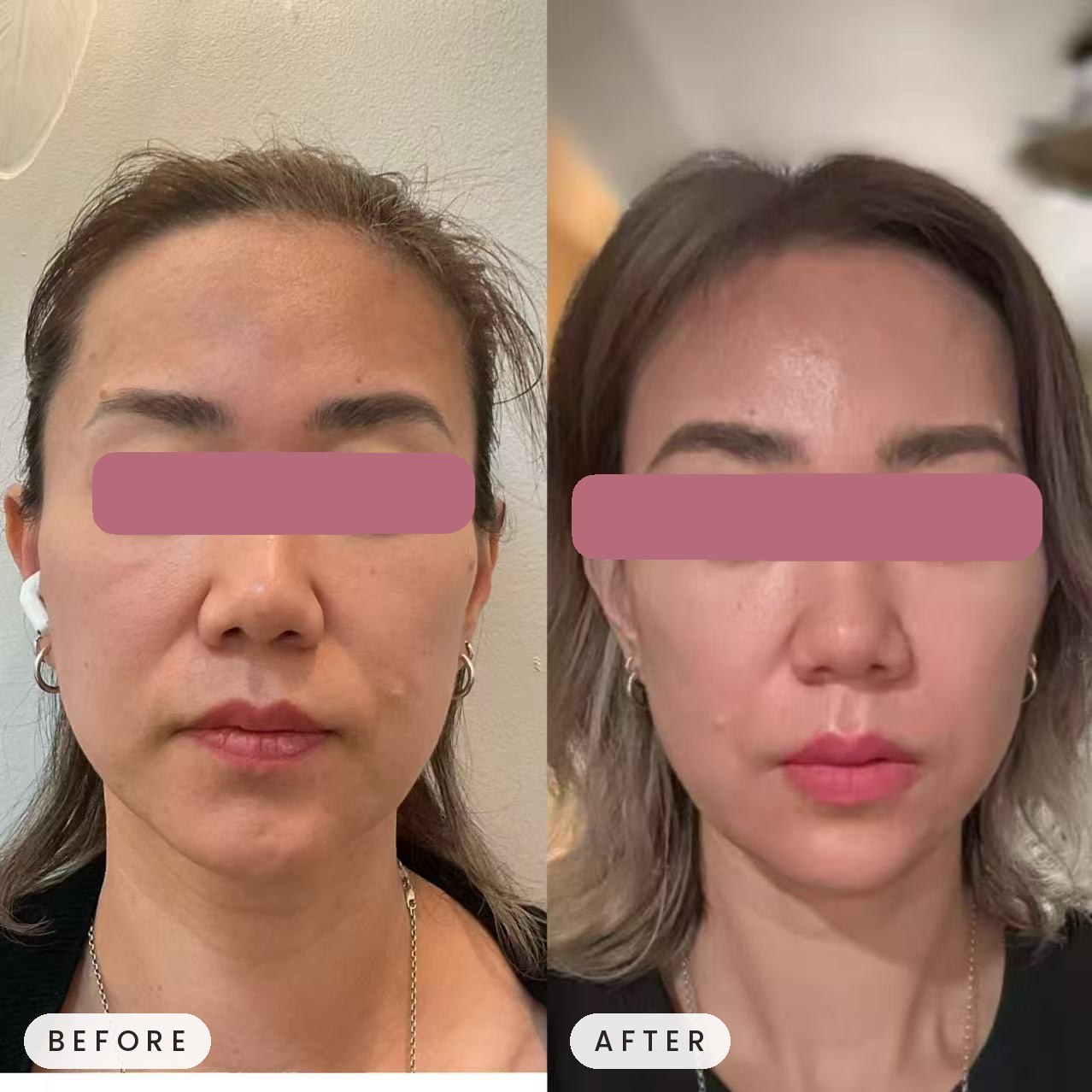
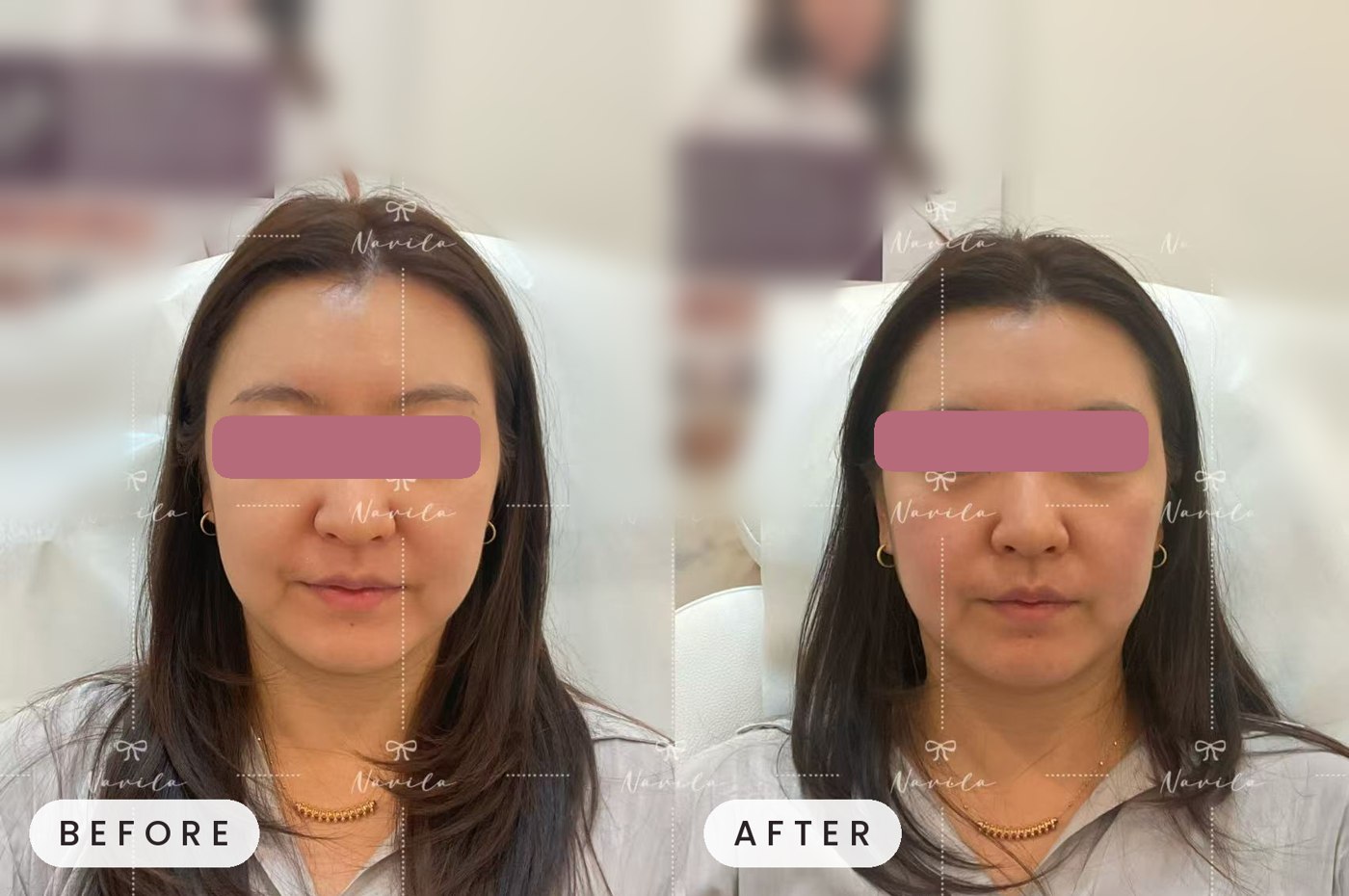
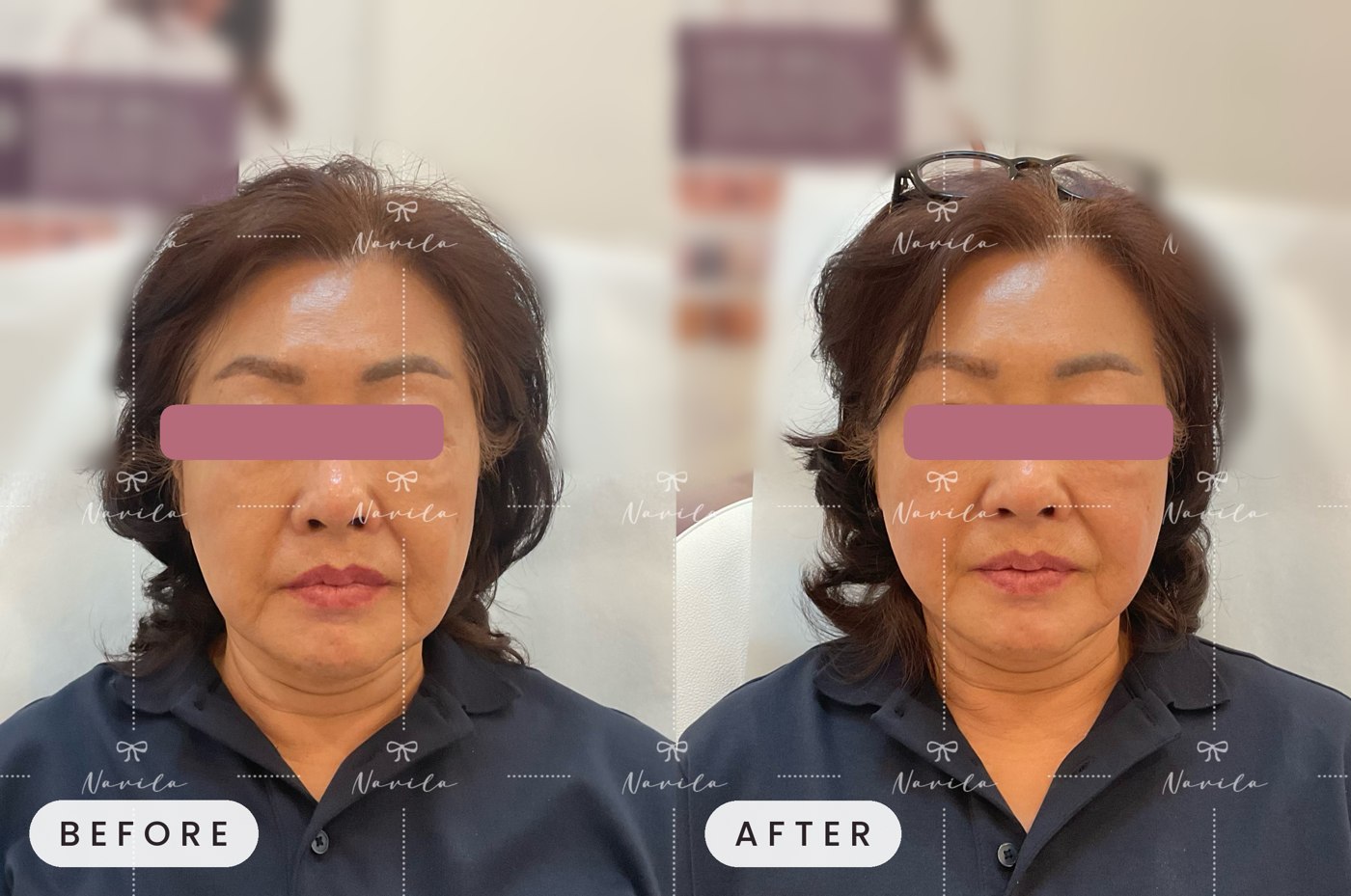
Every photo below was taken immediately after a single treatment session, in the same lighting and position. We show them because the early change is real — but the fuller lift builds over the two to three months that follow, so what you see here is the starting point, not the finish.
Lower Face & Jawline
The jawline is where laxity shows first and bothers patients most. Energy delivered at the SMAS along the lower face draws that margin back up, so the transition from cheek to jaw reads as one line rather than a soft break.
Immediately after treatment
Full Face
Treating the full face keeps the result balanced — brow, midface, and jaw move together instead of one area looking corrected against the others. This is the most common plan for patients in their fifties and sixties.
Immediately after treatment
Profile & Neck
Profile is where submental fullness and neck laxity are hardest to hide, and where surgical alternatives get invasive quickly. Ultherapy treats under the chin and down the neck without incisions or recovery.
Immediately after treatment
Three-Quarter View
Filler adds structure by adding volume. Ultherapy does the opposite — it repositions what is already there. For patients who want definition without looking fuller, this is the distinction that matters.
Immediately after treatment
Lower Face Contour
Because Ultherapy uses ultrasound rather than light, it does not target pigment — which makes it appropriate for deeper skin tones that carry risk with some laser-based tightening devices.
Immediately after treatment
Every Ultherapy result above, side by side.

Lower face & jawline

Full face

Profile & neck

Three-quarter view

Lower face contour

Lower face & jawline

Combination — Ultherapy + Botox + microneedling
All photos taken immediately after a single treatment session and shared with patient consent. Early tightening includes the tissue's immediate response to treatment; the fuller collagen result develops over two to three months. Individual results vary with age, skin laxity, and the number of sessions, and are not a guarantee of outcome.
Does Ultherapy hurt?
You feel heat in short pulses as energy is delivered — most patients describe it as tolerable rather than painful. We adjust settings to your comfort and can discuss options beforehand if you are sensitive.
How long do results last?
Because Ultherapy works by building your own collagen, results typically hold for a year or more. Skin continues to age, so many patients repeat treatment annually to stay ahead of new laxity.
What makes Ultherapy different from other tightening treatments?
Depth. Ultherapy is the only treatment that uses focused ultrasound to reach the SMAS — the same deep support layer addressed in a surgical facelift — and ultrasound imaging lets the provider see each layer before delivering energy. That combination is what produces genuine lift rather than surface tightening.
Am I a good candidate?
Ultherapy suits mild to moderate laxity — skin that has started to descend but still has elasticity. If laxity is advanced, we will say so honestly and discuss what would actually get you the result you want, including surgical referral.
Is there any downtime?
None. Some patients have mild redness or tenderness for a day or two, and occasionally slight swelling. You can return to normal activity and wear makeup the same day.
Book a complimentary Ultherapy consultation at our Tustin studio and we'll map out what is realistic for your skin.
Book Your Visit